


 21/10/2026
Local action can lead to regional change, while the active engagement of young people can help build safer, more inclusive and sustainable local communities. More than 100 mayors, young leaders, activists and representatives of local authorities and international organisations took part in the Regional Forum on Local Leadership for Youth, Peace and Security, held in Skopje.
One of the Forum’s key messages was that the voice of young people in the places where they live must not be limited to consultations and occasional involvement in municipal activities. Functional youth councils, greater support for youth initiatives, adequate funding in municipal budgets and mechanisms that enable young people to actively participate in shaping local policies are needed.
The Mayor of Skopje and President of ZELS, Orce Gjorgjievski, said that a shared focus across the region should be the creation of safe, inclusive and supportive environments for young people.
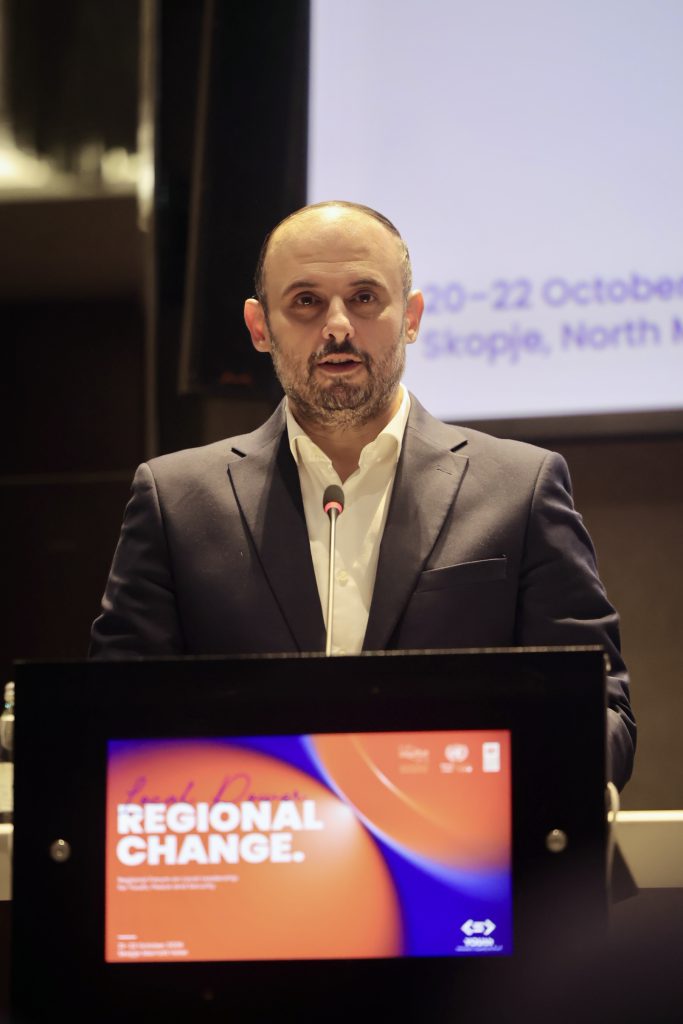
“The emigration of young people is a serious challenge for us. The situation is similar throughout the region and beyond, and we must make a genuine effort to do everything possible to slow this trend and even reverse it. If we want young people to see their future in their own country, we must create equal conditions and opportunities throughout the country for quality education, culture, sport, employment, housing and starting a family,” said Gjorgjievski.
Cooperation between central and local governments, as well as the development of regional partnerships through the exchange of experiences and joint initiatives, can make a significant contribution to advancing youth policies.
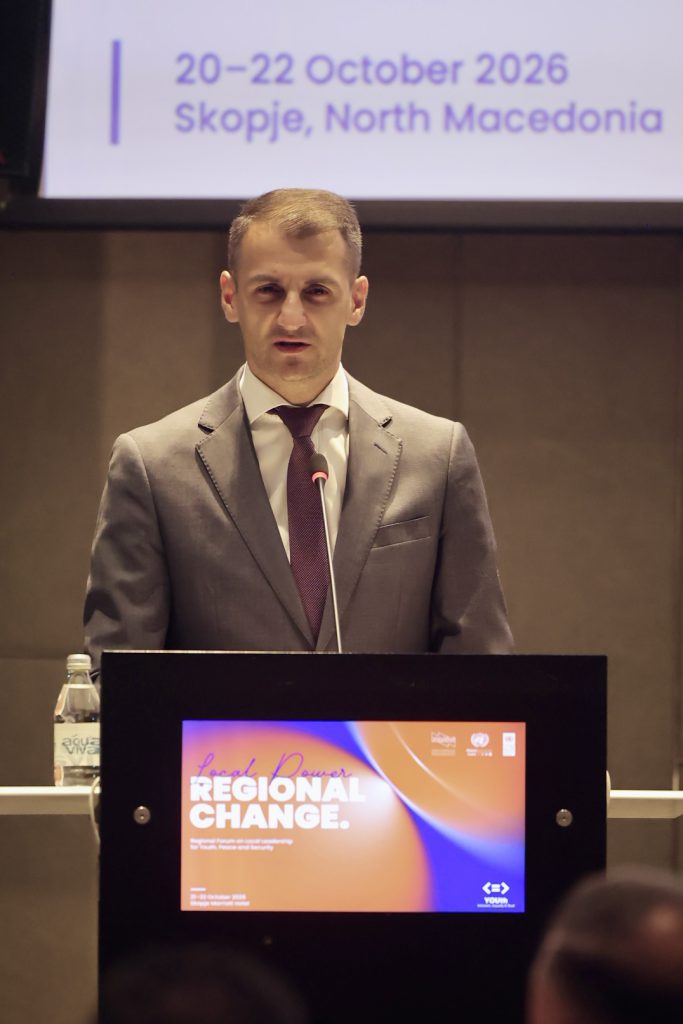
“Young people should not only be the subject of our policies, but active partners in creating them. The Republic of North Macedonia has a legal framework for youth participation and youth policies. Our challenge is to apply it consistently, especially at the local level. This is precisely why municipalities have a key role. Youth councils, youth officers and local policies must function in practice, with concrete activities and adequate budget support,” said Gjoko Velkovski, Minister of Social Policy, Demography and Youth.
Around 3.6 million young people live in the region, representing one fifth of the total population. Representatives of UNDP and the United Nations stressed that young people should be seen as partners and creators of solutions, particularly in the context of the global Youth, Peace and Security Agenda.
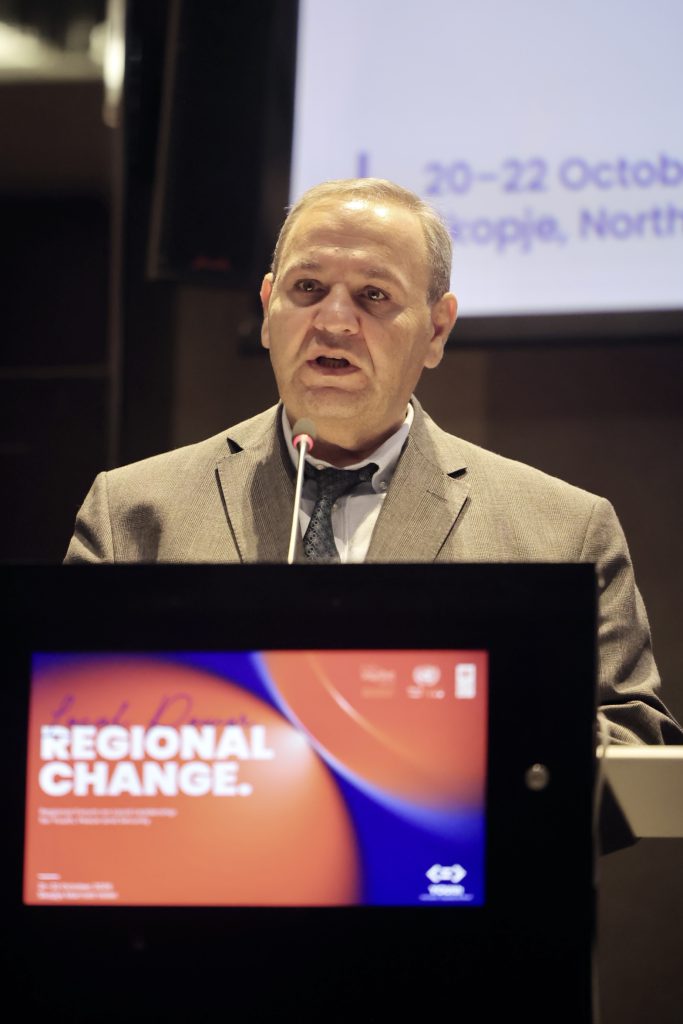
“Young people have ideas, energy and a genuine desire to make positive change. What they often lack is someone to listen to them, take them seriously and give them an opportunity to act. This is exactly what we work on at UNDP. We supported the development of the National Youth Strategy, trained more than 40 youth officers, supported five local youth councils and ten youth-led initiatives, and enabled direct dialogue between young people and local decision-makers,” said Armen Grigoryan, UNDP Resident Representative.
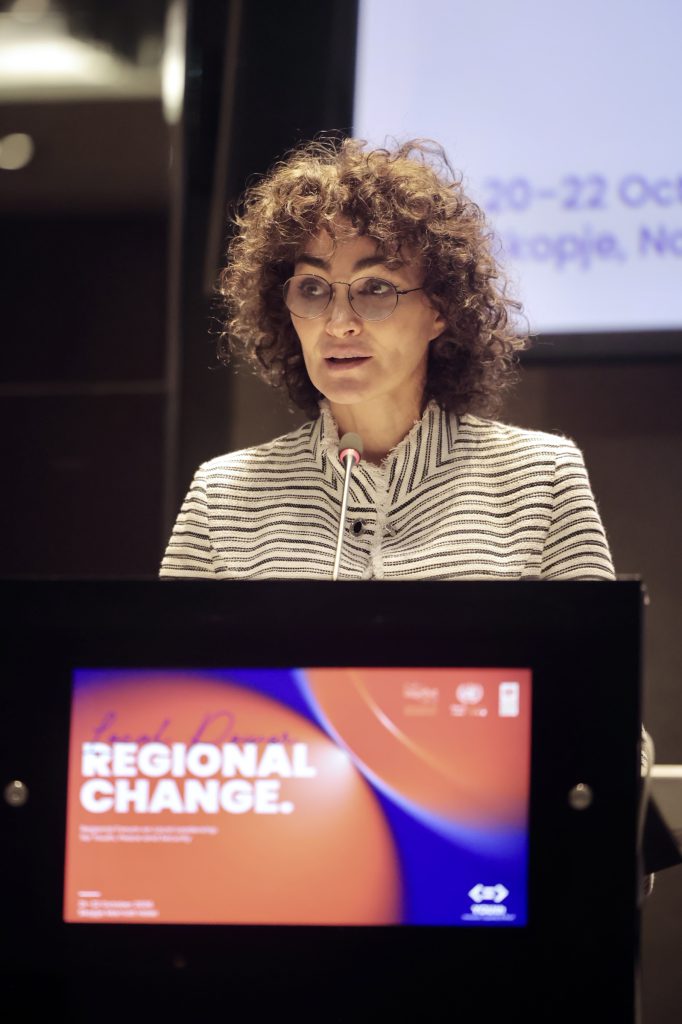
“The United Nations supports municipalities in integrating the principles of the Youth, Peace and Security Agenda into the development and implementation of local strategies. The sustainability of these commitments depends on the budgets and activities of local and national authorities, as well as the efforts of civil society to enable young people to participate and have greater influence,” said Rita Columbia, UN Resident Coordinator in North Macedonia.
During the Forum, five municipalities received regional recognition for successfully implementing initiatives related to youth participation. Bogovinje received recognition for developing partnerships, Gjirokastër for its contribution to safer communities, Lipjan for peacebuilding, Tuzla for creating an inclusive future, and Obrenovac for strengthening the voice of young people.
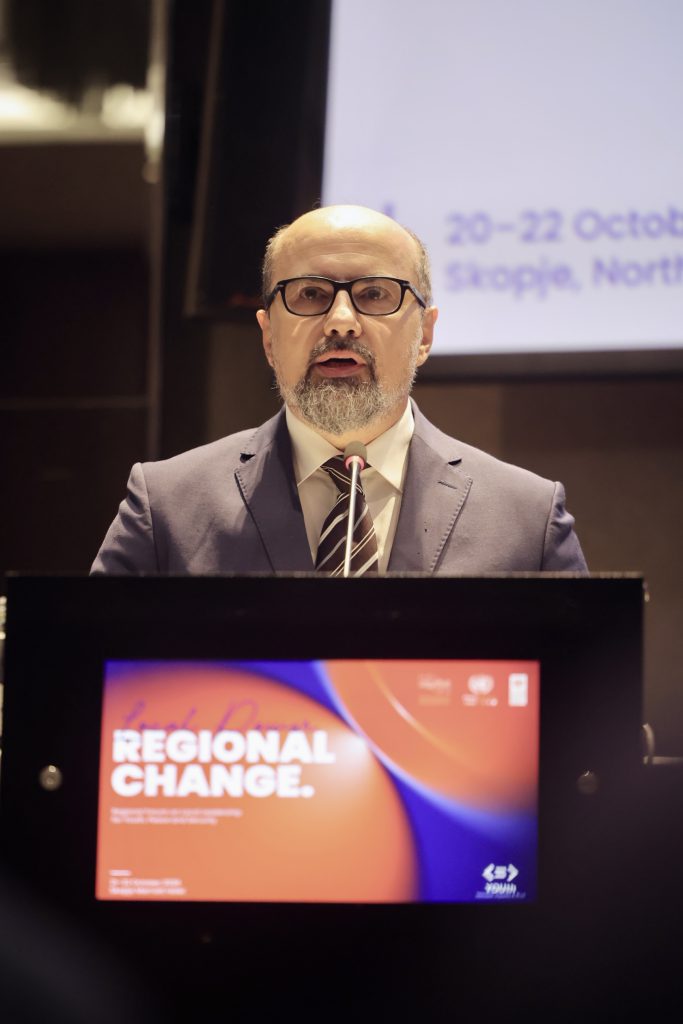
“The five Local Champions for Youth, Peace and Security demonstrate that young people can help make their communities safer, more inclusive and more connected. Through NALAS and our member associations, we want to help more municipalities learn from these examples and give young people a meaningful role in shaping local decisions,” said Kelmend Zajazi, NALAS Executive Director.
The Regional Forum was organised by the Network of Associations of Local Authorities of South-East Europe – NALAS, within the project “Youth 4 Inclusion, Equality & Trust”, implemented by UNDP in cooperation with UNFPA, UNICEF and UN Women, with support from the United Nations Peacebuilding Fund.


